
Living in a rainy climate is a lifestyle choice. Complaining about the weather is not. But here is the thing: while you cannot control the clouds, you absolutely can control what stands between them and your living room ceiling. Choosing the right roofing materials before peak spring demand hits is one of the smartest financial decisions a homeowner can make. Contractors book fast, prices climb with the calendar, and your aging roof does not get any younger waiting for the right moment. The right moment is now.
In this guide, we break down the best materials for wet-weather performance, what features matter most, and how to get ahead of the spring rush before everyone else figures it out.
Don’t Let Rain Ruin Your Roof: Choose the Right Materials Early
Rain is relentless. It does not take weekends off, it does not care about your warranty, and it has a way of finding every weak point in a compromised roof. Constant exposure to moisture leads to leaks, mold growth, rotting decking, and structural damage that goes from expensive to very expensive in a hurry.
The homeowners who come out ahead are the ones who treat their roof like the critical system it is, not a “we’ll deal with it when it’s a problem” afterthought. Selecting the right roofing materials before the spring installation rush means better contractor availability, more competitive pricing, and peace of mind before the heaviest rainfall season arrives.
Planning ahead is not just smart. In rainy climates, it is necessary.
Why Rainy Climates Demand Better Roofing Protection
Not all roofs are created equal, and not all roofing materials hold up the same way under persistent wet weather. What works fine in Arizona can fail fast in the Pacific Northwest, the Gulf Coast, or anywhere else that sees serious seasonal rainfall.
Common Roofing Problems in Wet Weather
- Water pooling and slow drainage that saturates roofing layers over time
- Mold, mildew, and algae growth that compromise both appearance and structural integrity
- Premature material deterioration caused by repeated wet and dry cycles
- Shingle lifting and cracking that opens entry points for moisture
Key Features to Look for in Rain-Ready Roofs
When evaluating moisture resistant roofing for a wet climate, prioritize these characteristics:
- High water resistance with minimal absorption rates
- Strong durability under constant moisture exposure without warping or cracking
- Efficient drainage design, particularly low-profile profiles that shed water quickly
- Resistance to algae and moss, which thrive in humid, shaded conditions
Best Roofing Materials for Rainy Climates
Here is where the rubber meets the rain. Each of these materials has a distinct performance profile in wet environments. Understanding the tradeoffs helps you make a smarter investment for your specific home and climate.
Asphalt Shingles
The workhorse of American residential roofing, asphalt shingles are affordable, widely available, and easier to install than most alternatives. Modern asphalt shingles waterproof performance has improved significantly, with fiberglass-reinforced options offering better moisture resistance than older organic-mat versions. They are best suited for areas with moderate rainfall rather than relentless downpours, and algae-resistant coatings are a smart upgrade in humid conditions.
Metal Roofing
Metal roof benefits in rainy climates are hard to argue with. Metal sheds water faster than virtually any other material, thanks to its smooth surface and steep-slope compatibility. It does not absorb moisture, it will not rot, and it holds up under heavy rain and wind for 40 to 70 years with minimal maintenance. It costs more upfront than asphalt, but for homeowners in high-rainfall regions, the long-term math usually favors metal.
Slate Roofing
If longevity is the goal, slate is the gold standard. Naturally water-resistant and extremely dense, slate can last 75 to 100 years in the right conditions. It is a premium material with a premium price tag, and it requires a structurally reinforced roof deck to handle the weight, but few roofing options outperform it in raw weather resistance and lifespan.
Clay and Concrete Tiles
Clay and concrete tiles are highly resistant to moisture and rot, and they perform exceptionally well in warm, wet climates. Their curved profile channels water efficiently away from the roof surface. Like slate, they are heavy and require proper structural support. Maintenance needs are moderate, particularly around keeping the tiles clean of moss in very humid environments.
Synthetic Roofing Materials
Engineered roofing products, including synthetic slate and composite shingles, are designed to deliver the look and performance of premium materials at a more accessible price point. They are lightweight, weather resistant roofing options that resist moisture absorption, algae, and impact. Lifespans typically range from 30 to 50 years, making them a strong mid-tier option for wet climates.
Table 1: Comparison of Roofing Materials for Rainy Climates
| Material | Lifespan | Water Resistance | Cost | Maintenance |
| Asphalt Shingles | 20-30 yrs | Moderate | Low | Medium |
| Metal Roofing | 40-70 yrs | High | Medium-High | Low |
| Slate | 75-100 yrs | Very High | High | Low |
| Clay/Concrete Tile | 50+ yrs | High | Medium-High | Medium |
| Synthetic | 30-50 yrs | High | Medium | Low |
How to Choose the Right Roofing Material for Your Home
The best roof for rainy weather is not one-size-fits-all. Your decision should factor in your budget, your home’s structure, and the specific weather patterns in your area.
Budget Considerations
Upfront cost matters, but so does total cost of ownership. A $7,000 asphalt roof that needs replacing in 20 years is not always cheaper than a $15,000 metal roof that lasts 50. Do the math over the long haul, and factor in lower maintenance costs for premium materials. Roof replacement materials are an investment, not just an expense.
Roof Structure and Slope
Some materials require specific slope minimums to perform correctly. Metal and asphalt shingles work across a wide range of pitches, while clay tile and slate need steeper slopes for proper drainage. Heavy materials also require a structurally reinforced deck. Your contractor should assess compatibility before any material decision is made.
Local Weather Patterns
Rainfall intensity, humidity levels, wind exposure, and freeze-thaw cycles all affect how different materials perform over time. A home on the Oregon coast faces very different conditions than one in South Florida, even though both see significant rain. Work with a contractor who understands your regional climate, not just general roofing principles.
Prepare Before the Spring Roofing Rush
Spring is the busiest season for roofing contractors across the country. Homeowners who wait until April to start making calls often find themselves at the back of a long line, paying higher prices and working around limited scheduling. Getting ahead of the curve is not a gimmick. It is a genuine advantage.
Schedule Early to Secure Your Spot
Contractors book weeks and sometimes months in advance during peak season. Reaching out in late winter locks in your place on the calendar before demand spikes. It also gives you time to compare bids without the pressure of an urgent timeline.
Get a Professional Roof Inspection
A professional roof inspection before spring reveals problems that winter weather may have quietly made worse. Identifying issues early gives you the option to address them proactively rather than reactively, and it helps your contractor recommend the right roofing systems for heavy rain before installation day.
Lock in Pricing Before Seasonal Increases
Material costs and labor rates tend to rise with demand during spring and summer. Committing to a project in the off-season frequently results in better pricing and more contractor attention. Roof installation timing is one of the most underrated ways to save money on a roofing project.
Additional Features That Improve Rain Protection
The roofing material is only part of the equation. A complete roofing system designed for wet climates includes several layers of protection working together.
High-Quality Underlayment
Underlayment is the secondary moisture barrier installed beneath your roofing material. In rainy climates, synthetic underlayment outperforms traditional felt. It resists moisture absorption, resists tearing during installation, and provides a reliable backup if surface water ever makes it past your shingles or panels.
Proper Roof Ventilation
Ventilation is often overlooked, but it is critical in humid climates. Without adequate airflow, moisture builds up in the attic space, which leads to mold, premature material deterioration, and higher cooling costs. Proper ventilation extends the life of any roofing material installed above it.
Gutter Systems and Drainage
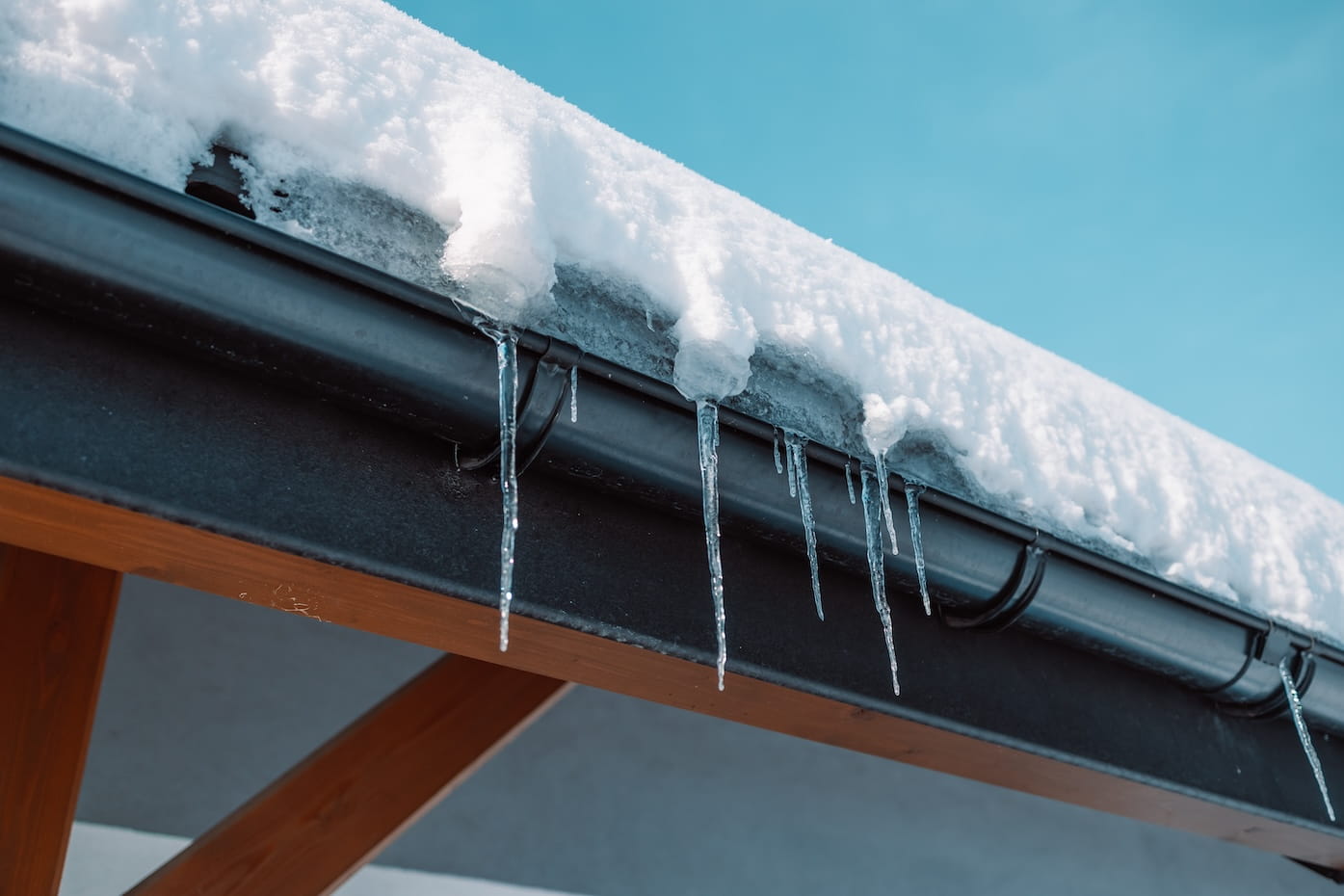
Even the best roofing material fails faster without a functional gutter system directing water away from your foundation and siding. Oversized gutters, gutter guards, and proper downspout placement are essential components of roof leak prevention in regions with heavy rainfall. Water and ice that lingers causes damage. The goal is to move it away efficiently.
Common Mistakes Homeowners Make in Rainy Climates
A few avoidable decisions can undermine even a well-planned roofing project. Watch out for these:
- Choosing materials based on upfront price alone without considering lifespan and total cost
- Ignoring drainage systems and treating the roof as a standalone solution
- Delaying replacement until the damage is severe and repair is no longer an option
- Hiring inexperienced contractors who lack familiarity with wet-climate installation requirements
- Skipping the inspection phase and guessing at what materials or repairs are needed
Work with a Trusted Roofing Contractor
The best roofing materials in the world will underperform if installed incorrectly. In wet climates especially, proper flashing, underlayment placement, ventilation, and drainage integration require experienced hands. Build The Block Construction offers professional roof installation services in Medford and the greater Southern Oregon area with the expertise to match the right materials to your home, your climate, and your budget.
Look for contractors who are licensed, insured, and willing to walk you through material options rather than just defaulting to whatever is quickest to install. Your roof is a long-term investment. The contractor behind it should treat it that way.

Book Your Spring Roofing Estimate Before Schedules Fill Up
Whether you are evaluating roofing materials for the first time or finally pulling the trigger on a replacement you have been putting off, now is the time to act. Spring contractor schedules fill faster than most homeowners expect, and the homeowners who plan ahead secure better availability, better pricing, and better outcomes.
Do not wait for the first spring storm to remind you that your roof needed attention last fall. Contact Build The Block Construction today and book your spring roofing estimate before demand peaks. Our team will help you identify the right materials for your climate, your home, and your long-term budget.